
Advanced forming technologies, exceptional material properties, and rigorous quality standards define our ceramic solutions.
Patented production processes that deliver dense, dimensionally stable ceramics with superior ballistic performance.
Reaction bonding is a technology used for the production of dense ceramics. Through the process, a ceramic body is enriched with silicon based compounds, reaching a temperature up to 1,400 °C (2,550 °F), just below the melting point of silicon.
Reaction bonded silicon carbide (RBSC) is produced from a finely divided mixture of silicon carbide and carbon. The silicon reacts with the carbon to form additional silicon carbide, bonding the particles together. RBSC undergoes minimal dimensional change during sintering (less than 0.1%).
This technology produces parts, as close as possible to their final shape and contour, resulting in a finished product with minimal cutting. Reducing the number of production steps for a given process results in higher quality and lower cost.
This incorporates advantages such as: reduction of process variability, quality improvement in the finished product and the possibility to focus the design of mechanical devices on function.
Ceramic tiles compromise the incoming projectile by shattering it, decreasing its penetration ability. Ceramic materials are always supported by a pliable backing with polymeric, metallic, or both, composite materials.
Since the density of ceramic armor is substantially lower than steel, by substituting steel with ceramic armor, areal weight can be reduced by approximately half. Silicon carbide (SiC) and Boron Carbide (B4C) are used with densities of about 3,100 and 2,500 Kg/M³ respectively.
Boron Carbide B4C is among the hardest materials found on earth, ranking third behind diamond and cubic boron nitride.
Boron carbide powder is produced by reacting carbon with B2O3 in a furnace. For commercial use, B4C powders usually need to be milled and purified to remove metallic impurities.
2,500 Kg/M³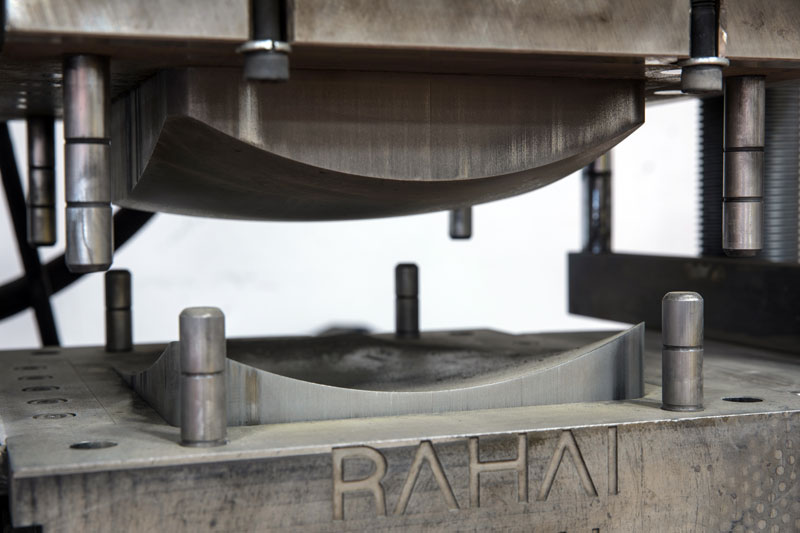
Silicon carbide (SiC) is an exceptionally hard, synthetically produced crystalline compound of silicon and carbon. Since the late 19th century silicon carbide has been an important material for cutting tools, grinding wheels and sanding materials.
More recently, it has found new applications in wear-resistant parts, industrial furnaces and semiconducting substrates for LEDs.
3,100 Kg/M³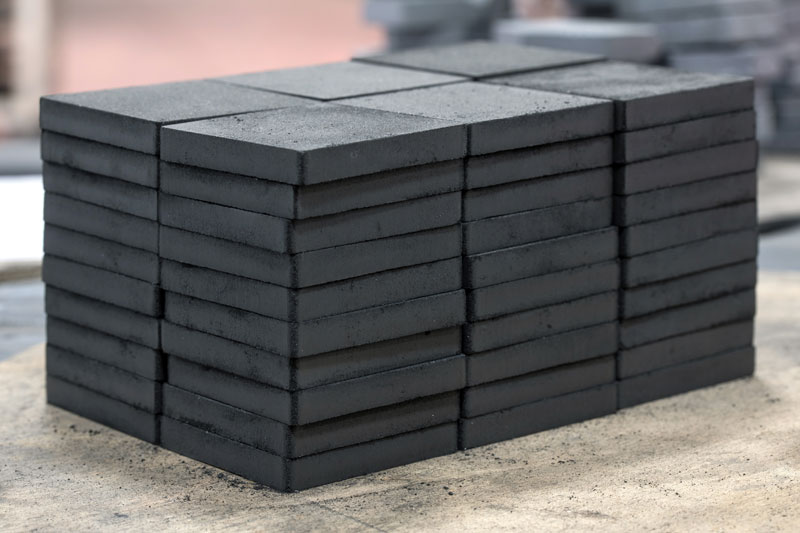
Our products are tested and certified against the world's most rigorous ballistic testing standards.
 STANAG
NATO standardization agreement for ballistic testing
 NIJ
NIJ
National Institute of Justice ballistic resistance standard
European ballistic resistance testing standard
Our engineering team can develop bespoke ceramic solutions using our patented technologies for your specific requirements.